

Types of canyoning ratings
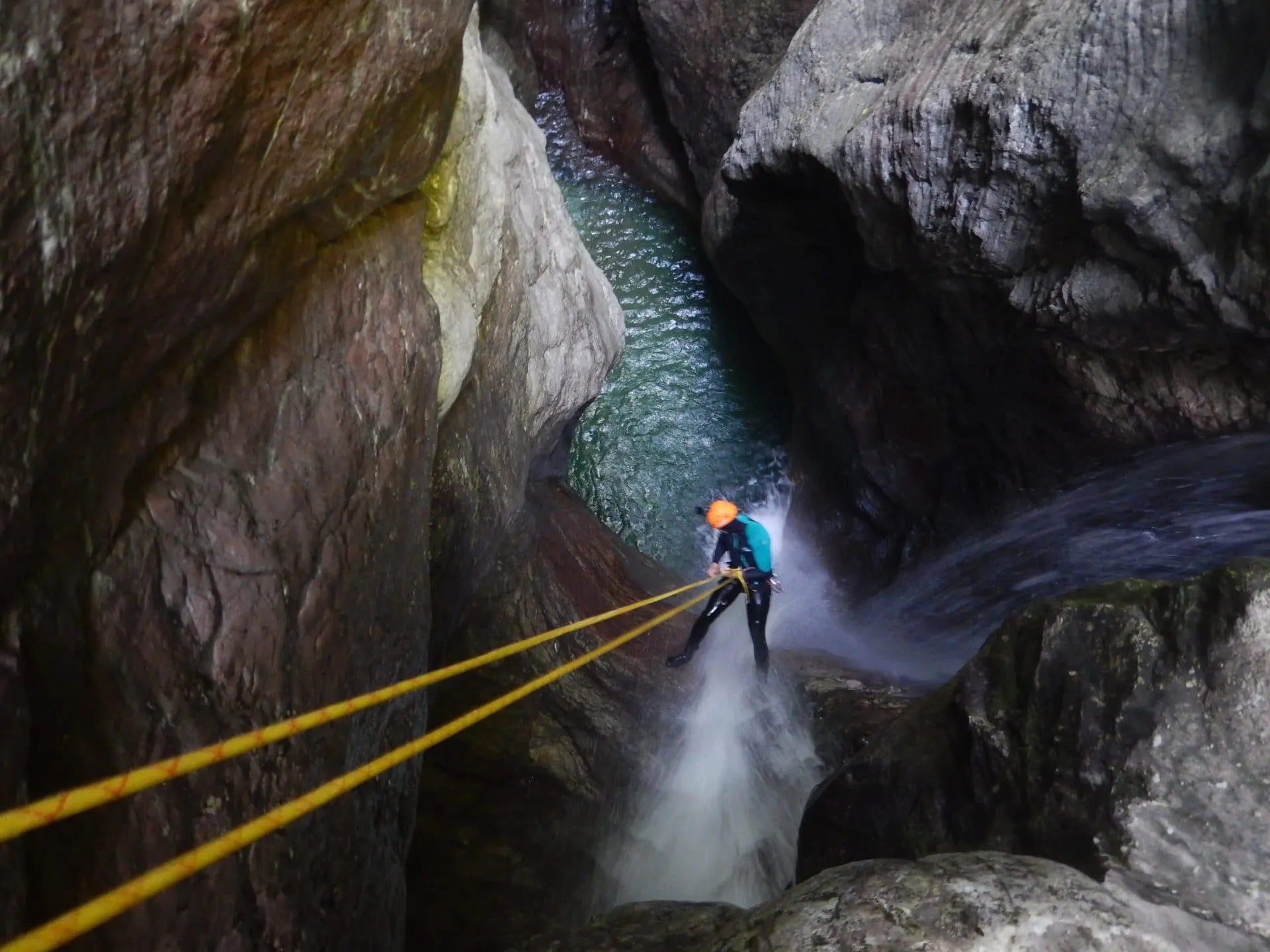
ACA UK Canyoneering Grading System
The core format of the UKCG Canyon Rating System includes two digits. The first digit is numeric and represents the values described below related to terrain and rope work. The second digit is an alpha character representing the values described below related to water volume and current. Additional values may be added to represent relative risk and time/commitment. Ratings are cumulative. For example: descending a Class 3 canyon will require the skills listed under Class 3, as well as those listed under Classes 1 and 2.
NOTE: Ratings refer to descents in normal conditions, during what is considered the normal season for the canyon. Adverse conditions, such as higher than normal water volume or colder temperatures, will increase the difficulty of the descent.
| WATER VOLUME / CURRENT | TERRAIN TECHNICAL ROPEWORK |
| A – Normally has water with light to moderate current. Easy water hazards. | 1 Gorge Walking and Gill ScramblingNon-technical; no rope required. May involve some easy scrambling requiring the occasional use of hands for balance and support. Travel is possible up or down canyon. See route description for more information. |
| B – Normally has water with strong current. Water hazards like hydraulics and
siphons require advanced skills and special care. |
2
Basic Canyoneering / Gorge Walking / Gill Scrambling Scrambling, easy vertical or near vertical climbing and/or down-climbing requiring frequent use of hands. Rope recommended for hand lines, belays, lowering packs and possible emergency use. |
| C – Normally has water with very strong current. Dangerous water hazards.
Experts only. |
3
Intermediate Canyoneering (Single Pitch Canyon) Exposed technical climbing. Down-climbing could be difficult and dangerous; most people will rappel. Rope required for belays and single-pitch rappels. Obvious natural or fixed anchors. Assess |
| D- Extreme problems and hazards will be difficult to overcome, even for experienced experts with strong swimming skills. | 4
Advanced-Expert Canyoneering Route may involve any combination of the following: 1) difficult and exposed free climbing and/or down-climbing, 2) climbing using direct aid, 3) multi-pitch rappels, 4) complex rope work |
FFME Canyoneering Grading System
This grade is based on the following;
An average water flow for the usual season that particular canyon is descended. A group of 5 people, who have not been in the canyon before, but have suitable
experience and skills to descend the canyon. The level of difficulty is set by at least one of the situations in the table being found in the canyon. The jumps are
required.
| vertical | AQUATIC | commITmenT | QUALITY |
| No rappels, rope normally unnecessary for progress. No climbing or down climbing. |
No water or calm water. Swimming optional. | Able to get out of a flood quickly. Escape is easy throughout the Canyon Total time |
Canyons that have been descended, but are not really worth the effort required. |
| Rappel anchors are very easily reached. Rappels are very easy <= 10m. Easy climbing and down climbing with little exposure. |
Swims less than 10m in calm water. Simple jumps less than 3m. Short, low angled slides |
Able to get out of a flood n less than 15 mins Escape takes up to 30 minutes. Total time (approach, descent, return) is between 2 and 4 hours. |
Locally Significant Canyons Good canyons that are worth the effort required to descend |
| Low Vertical flow. Rappels land in pools with calm water. Rappel anchors are easily reached. Rappels are easy. <= 30m. Rappels are separated by enough room to regroup. Setting hand lines is easy. Climbing moves to grade 12. A little exposure, which may require the use of a rope. |
Swims less than 30m in calm water. Slight current in places. Simple jumps between 3 and 5m Long or moderately angled slides. |
Able to get out of a flood in less than 30 minutes. Escape takes up to 1 hour. Total time (approach, descent return) is between 4 and 8 hours. |
Regionally Significant Canyons Canyons of above average quality that are worth returning to several times |
| Low to moderate vertical flow that can begin to cause imbalance or entrapment. Rappels anchors are difficult to reach and/or Rappels > 30m. Setting handlines is difficult and delicate. Mulit-pitch rappels with relatively spacious re-belay stations. Rough rock edges requiring rope wear management. Rappels with obscured sections and/or landings pools. Landing pools have current. Climbing moves to grade 15 or A0. Exposed and/or requires belaying and protection. |
Prolonged immersion in cold water. Moderate current in places. Simple jumps between 5 and 8m Jumps with difficult trajectory and/or landing of less than 5m. Siphons of less than 1m in length and / or depth. Large or steep slides. |
Able to get out of a flood in ess than 1 hour. Escape takes up to 2 hours. Total time approach, descent return) between 8 hours and 1 day. |
Nationally Significant Canyons Canyons that are worth travelling to from different regions. |
| Medium to high vertical flow. Crossing the flow requires correct route selection and balance. Multi-pitch Rappels may have hanging re-belays. Requirement to cross pools with current during the descent. Canyon surface is very slippery and / or has significant obstacles. Retrieving the rope is difficult or has to be done whilst swimming. Exposed climbing moves up to grade 18 or A1. |
Prolonged immersion in cold water resulting in a substantial heat loss. Current strong enough that it could affect a swimmers path through the water. Hydraulics such as eddies, recirculation, holes may trap a Canyonner for a short period of time. Simple jumps between 8 and 10m. Jumps with difficult trajectory and / or anding of 5 to 8m. Large Siphons up to 2m in ength and / or depth. |
Able to get out of a flood in less than 2 hours. Escape akes up to 4 hours. Total ime(approach, descent return) is between 1 and 2 days |
Internationally significant Canyons. The highest quality canyons, with an excellent mix of good access, beauty, fun and challenge. |
| Strong to very strong vertical flow Sustained waterfalls Crossing the flow is very difficult, requiring effective management of selected route and / or balance. Requirement to build advanced and / or delicate natural anchors Rappel anchors are very difficult to reach. Setting hand lines is very difficult and very delicate. Exposed climbing moves to grade 19 or A2. Canyon surface exceptionally slippery and/or loose. Rappel landing pools are turbulent and / or with significant current. |
Moderate current that makes a selected swimming path or stopping point difficult to achieve. Hydraulics such as eddies, recirculations, holes may trap a Canyonner for a moderate period of time. Simple Jumps between 10 and 14m Jumps with difficult trajectory and / or landing of 5 to 8m. Siphon of up to 3m depth and / or length. Technical siphon, up to1m deep, with possible current. |
Getting out of a flood takes more than 2 hours. Escape requires more than 4 hours. Total time (approach, descent return) is more than 2 days. |
|
| Very strong to extremely strong vertical flow. Very sustained waterfalls that lead into one another without a gap. Crossing the flow is extremely difficult; requiring anticipation and specific rope management, manoeuvre, balance, support and pace. Exposed climbing moves > grade 19 or A2 Limited visibility of route and frequent obstacles. Requirement to move through powerful current at the end of a rappel or rappel landing in a very turbulent pool with powerful current. Control of breathing: sections where you must hold your breath. |
Strong current that makes a selected swimming path or stopping point extremely difficult to achieve Hydraulics such as eddies, recirculations or holes may trap a Canyonner for a prolonged period of time. Simple jumps greater than 14m Jumps with difficult trajectory and / or landing greater than 10m. Siphons over 3m in length and / or depth. Technical and committing siphon, more than 1m tall, with current or no visibility. |
ACA Canyoneering Grading System
The basic format of the ACA Canyon Rating System includes three main components using alpha/numeric characters and roman numerals. The first digit is numeric and represents the values described below related to terrain and rope work. The second digit is an alpha character representing the values described below related to water volume and current. The third component is a roman numeral that represents the relative time/commitment. An additional alpha character can sometimes be added for risk or exposure. Ratings are cumulative. For example: descending a Class 3 canyon will require the skills listed under Class 3, as well as those listed under Classes 1 and 2.
| TECHNICAL ROPE WORK / TERRAIN | |
| 1 | Canyon Hiking Non-technical; no rope required. May involve some easy scrambling requiring the occasional use of hands for balance and support. Travel is possible up or down canyon. See route description for more information. |
| 2 | Basic Canyoneering Scrambling, easy vertical or near vertical climbing and/or down-climbing requiring frequent use of hands. Rope recommended for hand lines, belays, lowering packs and possible emergency use. Travel is possible up or down canyon. See route description for more information. |
| 3 | Intermediate Canyoneering Exposed technical climbing. Down-climbing could be difficult and dangerous; most people will rappel. Rope required for belays and single-pitch rappels. Obvious natural or fixed anchors. Retreat up canyon will require ascending fixed ropes. Basic pothole escape techniques (i.e. partner assist, counter- weights) may also be required. See route description for more information. |
| 4 | Advanced-Expert Canyoneering Route may involve any combination of the following: 1) difficult and exposed free climbing and/or down-climbing, high stemming or bridging 2) climbing using direct aid, 3) multi-pitch rappels, 4) complex rope work (i.e. guided rappels, deviations, rebelays), 5) obscure or indistinct natural anchors, 6) advanced problem-solving and anchor-building skills. See route description for more information. |
| WATER VOLUME / CURRENT | |
| A | Canyon Hiking Non-technical; no rope required. May involve some easy scrambling requiring the occasional use of hands for balance and support. Travel is possible up or down canyon. See route description for more information. |
| B | Basic Canyoneering Scrambling, easy vertical or near vertical climbing and/or down-climbing requiring frequent use of hands. Rope recommended for hand lines, belays, lowering packs and possible emergency use. Travel is possible up or down canyon. See route description for more information. |
| C | Intermediate Canyoneering Exposed technical climbing. Down-climbing could be difficult and dangerous; most people will rappel. Rope required for belays and single-pitch rappels. Obvious natural or fixed anchors. Retreat up canyon will require ascending fixed ropes. Basic pothole escape techniques (i.e. partner assist, counter- weights) may also be required. See route description for more information. |
NOTE: Water level in any canyon can fluctuate greatly from year-to-year, season-to- season, even day-to-day. If, upon arrival at a canyon, you discover the water volume/ current is greater
than indicated by the rating, descent will be more difficult than suggested by the route
description. It will be necessary to reevaluate your decision to attempt the descent.
| TIME / COMMITMENT (OPTIONAL) | |
| Half Day | |
| A | Short. Normally requires only a 1-3 hours. |
| B | Normally requires a 4-6 hours or a half day. |
| Full Day | |
| C | Normally requires 7-12 hours or most of a day. |
| D | Expected to take 13-18 hours or one long, full day. Get an early start. Bring a head lamp. Plan for possible bivy (overnight). |
| Multi Day | |
| E | Expected to take an average one and a half days. |
| F | Expected to take two or more days. |
NOTE: Time estimates are based on average group of 6 people or less. Larger groups and less experienced groups will take longer. An accurate self-assessment of your abilities will be important. For some users, it may be adequate to refer to time in terms of half day, full day or multi day. Others may prefer a more specific estimate and choose to use the Roman Numeral Grade system common in traditional multi-pitch rock climbing.
NOTE: Ratings refer to descents in normal conditions, during what is considered the normal season for the canyon. Adverse conditions, such as higher than normal water volume or colder temperatures, will increase the difficulty and time of the descent.
| RISK / SERIOUSNESS (OPTIONAL) | |
| R | Risky One or more extraordinary risk factors exist that could complicate the descent. Solid technical skills and sound judgment critical. Not recommended for beginners. |
| X | Extreme Multiple risk factors exist that will complicate the descent. Errors in technique or judgment will likely result in serious injury or death. Descent should only be attempted by expert canyoneers. |
| XX | Double Extreme Definitely life-threatening. |
NOTE: The presence of a risk/seriousness rating suggests that the canyon will involve higher than average risk. The absence or a risk/seriousness rating does not suggest that there will be no risk. All canyoneering involves risk.
Risk factors include number and frequency of rappels, length of rappels (single- or double rope) and exposure, anchor availability, anchor quality, route finding, obstacles, problem solving, terrain encountered between technical sections, flash flood potential, availability of exits and high ground, water temperature, prolonged immersion, and difficulty of evacuation or rescue. Specific factors should be addressed in the route description.
In conversations, you will often hear canyoneers refer to portions of a canyon’s complete rating. For example; they may simply refer to a canyon as Class 2 (referring to the terrain), as Class B (referring to the water), or as Grade IV (referring to the time required). In guidebooks and web sites, you should find complete ratings. A few examples:
3B IV
Class 3 terrain – ropes required. Water with no or very light current. Slightly more than average risk. Will require a long day for an average group.
2A III
Class 2 terrain that will require scrambling and climbing. Normally dry. Will require most of a day for an average group.
4A V
Class 4 terrain. Normally dry. An overnight trip for an average group. Advanced canyoneers only due to terrain rating.
3C II R
Class 3 terrain. Water with very strong current and dangerous hazards. One or more extraordinary risk factors exist. Solid technical skills and sound judgment critical. Expert canyoneers only due to water rating.
4A III XX
Slot canyon with very difficult and exposed climbing/stemming problems. Normally dry. Life threatening even for expert canyoneers. Will require most of a day for an average group. Expert canyoneers only due to terrain and risk/ seriousness ratings.
پست های مرتبط
16 خرداد 1405

23 بهمن 1404
29 آذر 1404

دیدگاهتان را بنویسید